The Missing First Rung
This research note examines how artificial intelligence is changing the relationship between early-career work, learning and capability development. Drawing on five structured...
Download availableAIGW Policy Observatory — Global AI Governance and Workforce Transformation Policy Observatory. Independent institutional intelligence on AI adoption.
Independent institutional intelligence on AI adoption
AIGW Policy Observatory translates regulatory developments, implementation evidence, and workforce signals into practical decisions for enterprise and public-sector leaders redesigning governance, workflows, roles, and institutional capability.
Featured Institutional Intelligence
Policy signals, implementation evidence, workforce analysis, and institutional briefings for leaders navigating governed AI adoption.
This research note examines how artificial intelligence is changing the relationship between early-career work, learning and capability development. Drawing on five structured...
Download availableA guide to China’s 2026–2030 framework for AI adoption, employment transition, public-sector transformation and risk governance
As frontier AI firms and professional-services firms move deeper into enterprise deployment, a tempting assumption is emerging: if AI implementation is hard, the answer is to...
Recent signals from OpenAI, GitLab, Gartner, and the European Commission suggest that enterprise AI adoption is entering a new phase. The challenge is no longer simply whether...
AI Governance Profiles
Country and jurisdiction profiles on AI laws, governance frameworks, institutions, enterprise implications, and workforce readiness.
Asia-Pacific

China’s AI governance system is not organized around a single horizontal AI Act. It is a layered governance stack built from cybersecurity, data security, personal information protection, internet information service regulation, algorithm recommendation rules, deep synthesis rules, generative AI service measures, AI-generated content labeling requirements, cross-border data controls, and technical standards. The result is a state-led, security-sensitive, platform-and-data governance model in which AI compliance is closely tied to content governance, data governance, filing or assessment mechanisms, technical labeling, and industrial policy.
North America

A high-impact jurisdiction where federal guidance, agency enforcement, standards work, and state-level activity are evolving in parallel.
Europe

The European Union remains the anchor jurisdiction for binding, cross-sector AI governance. Its model is distinctive because it combines a directly applicable regulation, a tiered risk framework, centralized Commission and AI Office oversight for general-purpose AI models, and member-state market surveillance for most AI systems. For enterprises, the EU is no longer just a “future compliance” regime: prohibitions, AI literacy, governance, and GPAI obligations are already in force, while Article 50 transparency and most system-level obligations are either applicable or entering concrete operationalization through guidance, standards, and enforcement structures.
How We Help Institutions Think
The Observatory connects policy signals, implementation evidence, and workforce implications so institutional leaders can move from awareness to action.
AI regulation, standards, enforcement, market signals, institutional expectations, and emerging implementation patterns.
Track governance developmentsImplications for governance, operating models, accountability, workforce architecture, risk, management, and institutional capability.
Understand institutional implicationsGovernance design, workflow redesign, role transition, workforce development, implementation controls, measurement, and management capability.
Explore practical decision supportImplementation Evidence
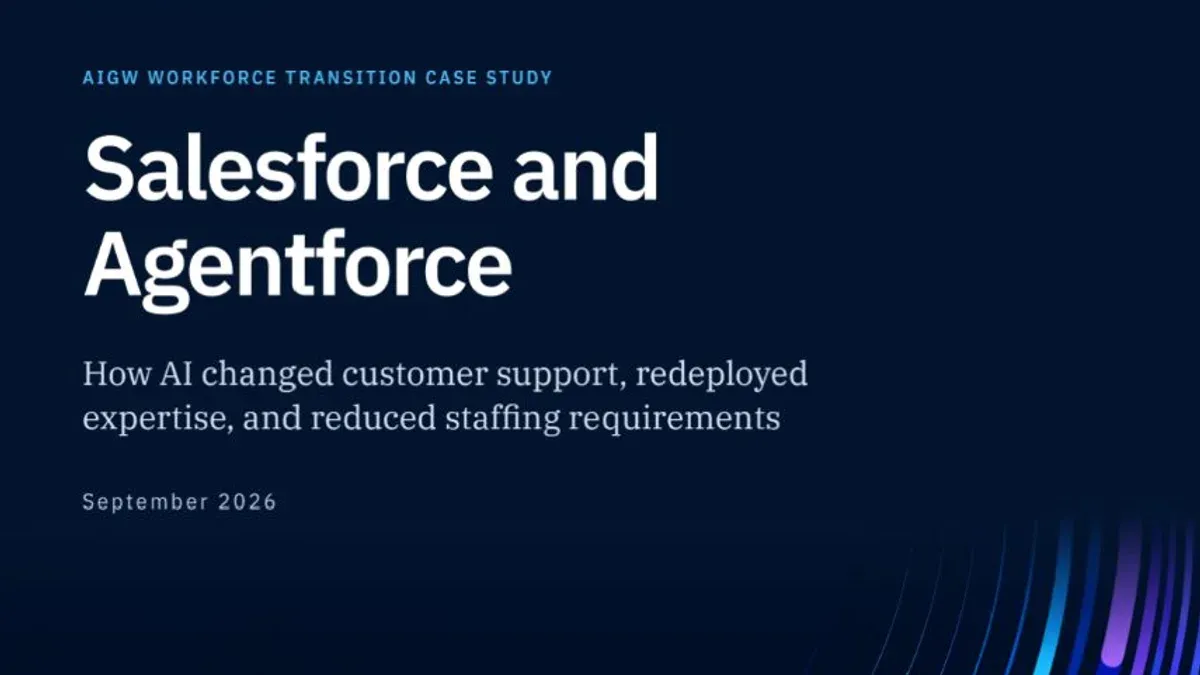
Case-based analysis of how organizations move from AI pilots to governed adoption, workflow redesign, workforce transformation, implementation risk, and institutional capability.
Risk Case
WiseTech
AI Governance
AI workforce transformation is now entering a more difficult phase.The first phase was mostly about adoption: which tools employees should use, how much productivity they could unl…
Enterprise Implementation Case
Amazon + Accenture
AI Governance
AI is moving from individual productivity assistance into managerial workflows.That distinction matters. A productivity tool helps an employee work faster, summarize a document, pr…
Enterprise Implementation Case
Merck
Enterprise Implementation
Merck’s multi-year AI partnership with Google Cloud is more than a major technology investment. It is a high-value signal that enterprise AI is moving from isolated pilots to cross-functional operating-model redesign. This case brief extracts what the move reveals about pilot-to-production transition, institutional readiness, and the organizational conditions required for AI to scale inside real enterprises.
Diagnostics and Decision Support
Frameworks, diagnostics, and mapping methods that help institutions translate AI ambition into clearer governance, workforce decisions, and implementation controls.
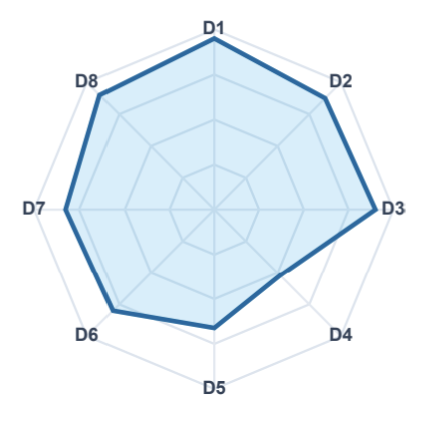
A developmental beta assessment for adults with recent professional generative AI use context, designed for reflection and research validation rather than employment screening or performance management.
Core dimensions measured
Clarify roles, responsibilities, approval boundaries, and guardrails for responsible workplace AI use.
Explore toolMeasure adoption, risks, workforce effects, and implementation outcomes across workplace AI initiatives.
Explore toolKnowledge assets
Recorded expert dialogues and public convenings — citable knowledge assets from the Observatory’s programme.
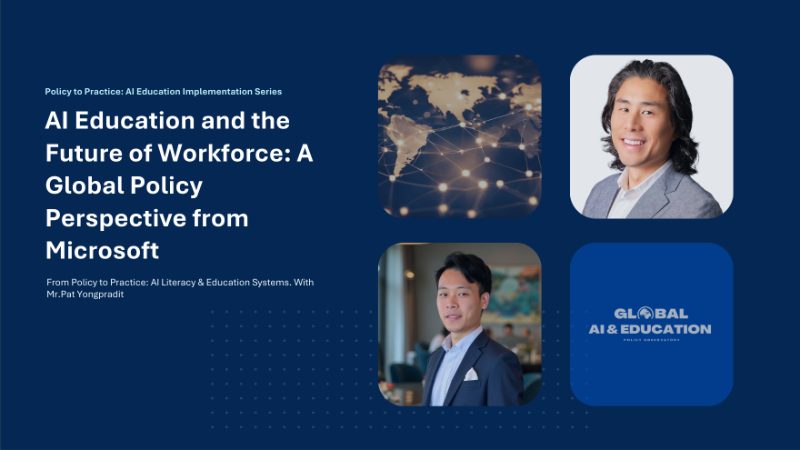
Mr.Pat Yongpradit
AI Education Policy Perspective
Watch replayYoung Global AI Leaders from Chengdu, Chicago, Dubai, Nairobi, Lucerne
AI Education Policy Panel Discussion
Watch replayJoshua Dahn
Learning to Think in the Age of AI
Watch replayStrategic Programme
A research-backed programme helping middle managers translate AI strategy into governed workflows, responsible team adoption, role and task redesign, measurable workforce capability, and clearer implementation accountability.
Evidence and Credibility
The Observatory combines public policy analysis, implementation cases, workforce evidence, and expert dialogue to produce intelligence that is relevant to institutional decisions.
Review Our Evidence and ApproachInstitutional Solutions
We work with enterprises, public institutions, and ecosystem partners to translate AI policy and implementation evidence into governed adoption, workforce capability, and institutional learning.
Executive interpretation of regulatory developments, governance expectations, implementation implications, and cross-border policy change.
Structured documentation and analysis of how organizations move from AI pilots to governed adoption, workflow redesign, and workforce transition.
Focused expert conversations that surface implementation challenges, emerging practices, and institutional learning.
Research-backed support for role transition, management capability, workflow redesign, responsible adoption, and workforce readiness.
Collaborative research on governance systems, institutional adoption, workforce transformation, and implementation evidence across jurisdictions.